
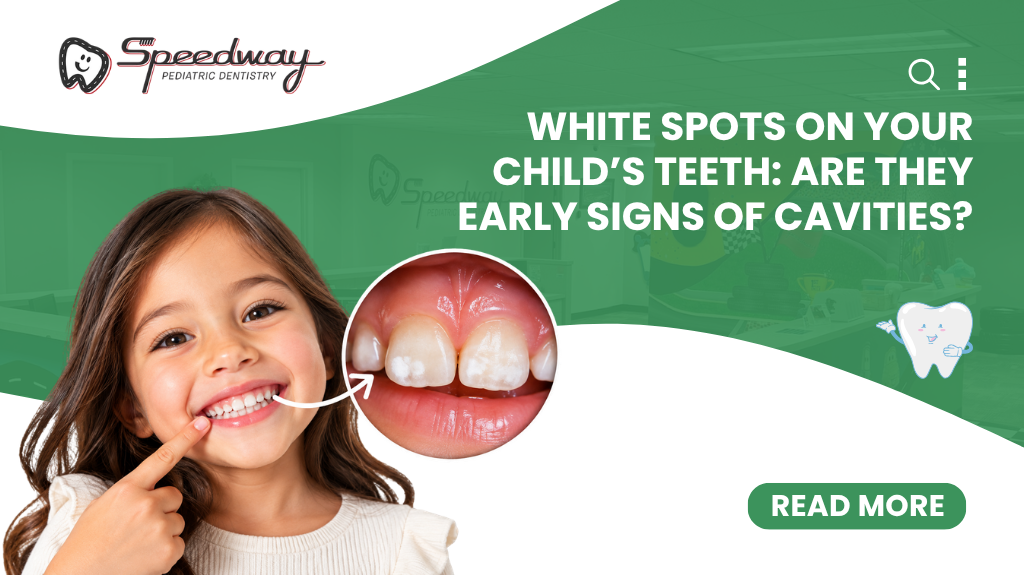
Seeing white spots on your child’s teeth can be concerning, especially when you are not sure what caused them. You may wonder if they are simply part of your child’s developing teeth or an early sign of tooth decay.
The good news is that white spots do not always mean your child has a cavity. However, they can sometimes be an early sign of changes in the tooth enamel that should be evaluated by a pediatric dentist.
At Speedway Pediatric Dentistry in Indianapolis, understanding these changes early can help parents take action before a small concern develops into a larger dental problem.
What Do White Spots on Children’s Teeth Mean?
White spots can appear as chalky, cloudy, or lighter areas on the surface of a tooth. Several different factors can cause them.
In some children, white spots may be related to changes in enamel development. In other cases, they can indicate early tooth decay, also called a noncavitated caries lesion.
Early tooth decay can begin before a visible hole or cavity develops. That is why parents should not ignore a new or changing white spot, particularly if it appears near the gumline or on a tooth that frequently comes into contact with food and plaque.
A pediatric dentist can examine the area and determine whether it appears to be related to tooth decay, enamel development, or another condition.
Are White Spots an Early Sign of Cavities?
They can be.
When plaque and bacteria remain on the teeth, acids can gradually affect the enamel. This process can cause minerals to be lost from the tooth surface, sometimes creating a white or chalky appearance.
The American Academy of Pediatric Dentistry recognizes noncavitated caries lesions as part of the caries process and recommends individualized assessment based on a child’s risk factors and oral health.
This is important because early detection may allow a dentist to manage the problem before it progresses to a larger cavity.
What Causes White Spots on a Child’s Teeth?
White spots can have several possible causes, including:
- Early tooth decay or enamel demineralization
- Changes in enamel development
- Frequent exposure to sugary foods and drinks
- Poor plaque removal
- Certain developmental conditions affecting enamel
- Fluorosis or other changes that occur while teeth are developing
Because the causes can vary, looking at the tooth at home may not be enough to determine what is happening.
What Should Parents Do If They Notice White Spots?
If you notice a new white spot on your child’s tooth, schedule a dental evaluation rather than waiting for it to become a cavity.
In the meantime, help your child maintain consistent oral hygiene. The AAPD recommends brushing children’s teeth twice daily with an appropriate amount of fluoride toothpaste and supervising young children’s brushing.
Parents should also pay attention to frequent sugary snacks and drinks. Repeated exposure to sugar can increase the risk of tooth decay, particularly when children consume sugary foods or beverages throughout the day.
Can White Spots on Baby Teeth Be Treated?
Treatment depends on why the white spot developed and whether the tooth is showing signs of active decay.
If the area represents an early stage of tooth decay, your pediatric dentist may recommend preventive or minimally invasive treatment, along with fluoride, improved brushing, dietary guidance, or closer monitoring. More advanced decay may require restorative treatment.
The earlier the problem is identified, the more opportunities your child’s dental team may have to prevent it from becoming more serious.
When Should You See a Pediatric Dentist?
You should consider scheduling an appointment if your child has:
- A new white or chalky area on a tooth
- Spots that are becoming larger or more noticeable
- Brown or dark areas on the tooth
- Tooth sensitivity or discomfort
- Frequent cavities
- Difficulty brushing effectively
- A history of enamel problems
You do not have to wait until your child has tooth pain. Early dental visits can help identify changes before they become bigger problems.
Protect Your Child’s Smile at Speedway Pediatric Dentistry
White spots on your child’s teeth may be harmless, but they can also be an early warning sign of tooth decay. Having them evaluated can give you a clearer understanding of what is happening and what you can do next.
At Speedway Pediatric Dentistry in Indianapolis, our team provides children with age-appropriate dental care focused on prevention, early detection, and healthy smiles as they grow.
If you have noticed white spots on your child’s teeth, schedule an appointment with Speedway Pediatric Dentistry today. Early attention can make a difference in protecting your child’s smile.
Follow Speedway Pediatric Dentistry on Instagram for more helpful tips, pediatric dental advice, and updates for Indianapolis families.